Monday, 19 March 2012

INDIA, EVOLUTION, AND D.R.S.


BCCI: revolutionary or reactionary?

The fear of change. At one time or another, it afflicts us all. Imperceptibly, the audacity of youth becomes the trepidation of middle-age, only willpower preventing our curiosity from congealing into timorous conservatism and an future spent beating psychological retreat from the ominous shadows and the unlocalizable noises, withdrawing, defensive, into creasebound shotlessness and the perverse comfort of its at-least stable apprehensions. 

Cricket and conservatism are familiar bedfellows. Notwithstanding the superficially radical trappings of Twenty20 – its off-the-peg razzmatazz a ‘meme’ replicated worldwide and thus already an establishment of sorts – cricket, at the administrative level, is a culture disinclined to change (not off its own bat, anyway). Ask cricket supporters anywhere in the world to conjure forth an image of the sport’s establishment and chances are they’ll still picture the MCC members at Lord’s, the jowly, patrician personification of fusty traditionalism. 

ruling class
While this traditional view of traditionalism is itself perhaps now something of an archaism given India’s rise, it remains important to enquire whether such conservatism is institutional – part of the territory of the game’s elite, as it were, intrinsic to the game’s decision-makers across cultures and ages – or confined to an English old guard trapped in the post-Imperial aspic, fearfully trying to control and check an environment that just won’t sit still. Are all boards averse to change, for the simple reason that genuine innovation always threatens to pull the rug from under their feet? Most pertinently, is the BCCI – de facto leader of the global game – really a bastion of trenchant conservatism? Judging by its steadfast refusal to adopt the Umpire Decision Review System (DRS), the answer would seem to be affirmative; then again, it has been in the vanguard in embracing the all-singing, all-dancing, Brave New World of Twenty20. So, which is it: revolutionary or reactionary? 

cricketing arms race
Before trying to answer these questions, it is absolutely crucial to bear a couple of things in mind regarding the concept of evolution, be that cultural or natural. First, not all innovations are necessarily advancements, nor are they inevitable – things might have always happened differently, or not at all. There is no master plan. Second, despite popular misconceptions around Darwin’s notion of the “survival of the fittest” – in which evolution was seen as a process of adaptation leading to “optimal design” – neither biological nor cultural processes are governed by linear progress on an ascending line of improvement. Both are undirected, just as liable to stand still or go backwards as improve. When looking at the events and processes that move cultures and species along, these nonlinear dynamics can be seen in such phenomena as “arms races” that lock adversaries into mutually reinforcing, tit-for-tat paths of development in which advances on one side of a relation stimulate advances on the other, creating the snowball effect of ‘positive feedback’: ever-sharper fangs create ever-harder armour; a dilscoop leads to a slower-ball bouncer… But the key point – and the one that matters in relation to T20 and DRS – is that these advances may be suboptimal in relation to other selection pressures, other components in the ‘adaptive landscape’: for instance, a bird’s bright plumage might attract mates (advantage) but it may also reduce camouflage (disadvantage). In sum, whether one is talking about skill-sets for the competitive environments of sport, society, or nature, there is no fittest design at the end-point of linear evolution, because the criteria for optimality are changing in step with the dynamics. This is abundantly clear in the accelerated ‘evolution’ of societies, with the continual obsolescence of carefully acquired skills and the constant need to re-train sectors of the workforce.

Returning to cricket, then, the BCCI’s tight embrace of the Twenty20 golden goose is merely a line of development, not ‘progress’ per se. Perhaps the MCC and Test cricket are to feudalism as the BCCI and T20 are to capitalism, for in all ages the emergence of a new ruling class comes from seeing and harnessing the cutting edges of wealth and power that will submerge the old order. Simplifying a little, capitalist power is increasingly a matter of brute quantities and the BCCI is duly erecting its dominance upon India’s gigantic population and the depth of its affection for cricket, exploiting the huge domestic revenues from the economic boom (boom) created by this made-for-TV spectacle, and in so doing submerging the old order, yet all the while stabilizing and taming the revolutionary force of these flows that achieved the dominance in the first place.

BCCI executives consider DRS

the ostrich must evolve

It is too early to tell whether the shift in cricket’s geopolitical centre of gravity will lead to the slow withering of Test cricket, but the problem in this regard has less to do with the quantity of T20 being played as it does a (perhaps connected) general depreciation of Test cricket – certainly not something the BCCI deliberately sought out, but, all the same, a side-effect of their and Lalit Modi’s (inescapably semi-blind) behaviour in cricket’s ‘adaptive landscape’. There is still widespread bewilderment that the BCCI have been so obstinately anti-modern in their stance on DRS, particularly when its introduction was provoked, in large part, by umpiring mistakes in the infamous and contentious Sydney Test of 2008 that cost India (cost in the old currency of prestige, not the new one of currency). It is even more perplexing given that neither of the two most obvious ostensible reasons really stand up to scrutiny.

Firstly, their misgivings about the accuracy of ball-tracking technology (Hawk-Eye or Virtual Eye alike) are either a simple smokescreen concealing a powerful lobby within the team, or, more likely, a sincerely held yet tenuous and barely plausible stance, one that’s causing them to play a good way down the wrong line, as it were. As with evolution, DRS, at present, need not be ‘perfect’, a fittest design. It is merely a resource. Basing your opposition to DRS on the fact that it isn’t foolproof is akin to sticking to a homeopathic potion because the $10 billion medical facility up the road doesn’t cure 100 per cent of patients. 


Anyway, despite the alarmists’ caricature, the umpires are not obliged to devolve agency wholesale to the technology. In cases in which the video evidence is drastically contradicted by the virtual reconstruction of Hawk-Eye – generally off the bowling of spinners when there is little distance between ball pitching and striking the pad (as happened with Phillip Hughes in Sri Lanka last August) – surely they can, as arbiters, choose to rely on a combination of their eyesight and the camera. And if Hawk-Eye does have a blind spot, then at the very least a TV replay helps umpires decide where the ball pitched: not perfect; an improvement. And let’s not forget that, in the context of cricket officiating, the human eye is but an imperfect ball-tracking device.

Secondly, the absolutist belief that the umpire’s verdict is final is symptomatic of what might, in a manner of speaking, be called a ‘theological attitude’. Around the time of the launch of DRS in 2009, Ian Chappell wrote that the unquestioned acceptance of the umpire’s decision was the foundation of the game (certainly, his compatriot, Simon Taufel, a five-time winner of the ICC’s Umpire of the Year award, is cutting an increasingly crestfallen figure as more of his decisions are overturned). But surely the point is the one lucidly made by the late Peter Roebuck, that “nothing is more calculated to reduce authority than allowing obviously erroneous judgement to stand”. Ultimately, Chappell’s is an absurd stance, tantamount to saying he would rather have ‘honest mistakes’ than greater justice – truly, it belongs in Lewis Carroll. What sort of judicial system deprives its accused of the right of appeal if there is further evidence to be considered? Well, one that confines authority to the will of an sacred and/or incontestable individual, like the absolutist monarchies or totalitarian dictatorships. Such a blind insistence on the sanctity of the Umpire’s thunderbolt judgement disingenuously denies a basic human obstinacy on the part of the principles of justice, the unwillingness of those less fatalistic souls simply to acquiesce in a culture of (eminently avoidable) human errors that could prove decisive, could radically alter your career, your life. Everything in our instincts protests. 

umpires and the judgement from on high
One obvious compromise, at least on the face of things, would be to allow the umpires themselves to refer upstairs any decision they wish to, which shows that Authority per se is not being undermined, only that the means for arriving at decisions is being broadened. However, the likely consequences of this move would be that umpires would tend – much as happens with line decisions – to refer all decisions in which there was even a scintilla of doubt (which, given the fallibility of humans’ perceptual apparatus, would be many). If a Darwinian perspective views behaviour as fundamentally the striving after an advantage, there is simply nothing for an official to gain, and everything to lose, by making decisions based on fallible sensory evidence alone. Umpires wrongly failing to refer decisions would soon be ‘rested’. Moreover, this approach would do little to foster a culture of self-policing and restraint – for many observe that the players being invested in the decision-making has helped engender a more cordial, less suspicious atmosphere – since players would be ‘incentivized’ to appeal for everything, duly preying on the umpire’s doubts.


DRS = advantage India?

Clearly, the successful implementation of DRS – and the assent of the game’s stakeholders thereto – requires an adequate number of cameras shooting at an adequate number of frames-per-second to ensure the ball-tracking technology functions as it should, which itself raises serious cost issues that the ICC’s general cricket manager, Dave Richardson, recently said he expected would be factored into broadcasting tenders. There are also improvements to be made to Hot Spot – Vaseline might be best avoided if we are to lubricate the wheels of justice – whilst DRS needs to be universally applied for the much trumpeted Test Championship to have any credibility. Failing this, players with the newly acquired habits and behaviours that DRS inculcates in nations that have embraced it will face deep culture shock when they visit other, sceptical lands such as India – with all the potential for incomprehension, rancour and rifts that one already gets in other walks of life when moving between traditional and modern forms of authority, or vice versa.

Leaving aside whether or not the Indian reservations are legitimate, here’s the thing that no one seems to have recognised: DRS could be precisely the mechanism that revives India’s fortunes in the Test arena. Think about it. The single biggest change it has brought about is the number of lbw decisions going to spinners (which in itself provides an excellent example of the nonlinear dynamics outlined above – for the increase was evident before DRS was formally introduced, prompted by umpires watching Hawkeye footage and seeing how many previously rejected front-foot lbw appeals were actually going on to hit the stumps, the technology bringing about a qualitative shift in perception). Reciprocally, this tendency to uphold more appeals – not least because a mistaken ‘out’ decision can be rectified by review – is already affecting batsmen (as would a predator’s behaviour its potential prey), bringing about modifications in previously well-honed and well-adapted techniques (not to mention in tactics and perhaps even selection). One such batsman, Kevin Pietersen, even ascribes this qualitative change to a precise moment: when, on debut in Nagpur in 2006, Monty Panesar snared Sachin Tendulkar lbw on the front foot. 

Monty got a Raw Deal? No. DRS is a boon for spinners
At any rate, in the recently concluded series between Pakistan and England, 43 out of 110 wickets fell to lbws, 32 of those to spinners (in part attributable to the characteristics of the pitches). And India is, of course, the land of producing spinners. Anil Kumble’s 619 wickets and Harbajhan’s 406 are not negligible hauls (although one wonders how many more victims the former, particularly, would have snared under DRS) and the national side are very rarely without top-class twirlers and tweakers – one only need mention the great quartet from the 1970s: Erapalli Prasanna, Bishan Bedi, Bhagwath Chandrasekhar and Srinivas Venkataraghavan. It should be borne in mind that it is not a simple case of bowling straight at 60mph, and that you still need to deceive the batsman in flight and off the pitch, but it would seem that India is a country well equipped to prosper from DRS. 

Not only is India the fecund (crumbling) soil from which sprout many an autochthonous twirler, it is also the land in which batsmen grow up most adept at playing spin – with the bat, not the pad. And therein lies the point: there is no need for any high-mindedness or some noble gesture ‘for the good of the game’ for India to U-turn and adopt the DRS. It can be done on the entirely pragmatic grounds of it increasing their potency and gaining them an advantage: survivalist logic, if you will. Sure, India will still have to go to South Africa, Australia and England, and will need to develop players suited for those challenges, but we shouldn’t be too hasty to draw conclusions about their current playing strength from recent travails on the road.

DRS: an opportunity in the 'space of possibilties' for India's Test fortunes

DRS, T20 and feedback in a competitive milieu

As we said at the outset, cricket administration is, by and large, defensive and wary of novelty. India is not the sole country where an anti-modern outlook can be found (to anticipate a possible rebuke, please note that anti-modern is a strictly literal and value-free description). A good many celebrated Australian voices share this view of DRS, including Chappell and several other ex-players, as well as such esteemed writers as Gideon Haigh and Greg Baum, the latter even arguing recently in The Age that “DRS has come to be accepted as infallible… For players, to walk is no longer an ethical issue.” No longer! This can only be nostalgia. When survival (I mean livelihood, rather than innings) is at stake, players – people – tend to try and get away with things. The only modern player to make a virtue of walking was Adam Gilchrist and he was about as secure of his place in the team as is Table Mountain on the Cape.

Yet for every skeptical Baum asserting that “cricket needs to wean itself off an almost infantile dependence”, there is an Osman Samiuddin who understands the economic pressures and political kowtowing underpinning the refusal to push for the compulsory adoption of DRS: “The problem is the way [the BCCI] have bullied member boards behind the scenes – at the risk of damaging lucrative bilateral ties – into making DRS implementation non-mandatory. And in that, the bullied are as culpable for allowing it to happen. It is not up to that much-imagined but non-existent, independent decision-making supra-ICC body to enforce DRS. It is up to individual member boards.” 

Dave Richardson has seen the future
Now, it is perhaps naïve, or romantic even, to suppose that the primary goal of an individual national board – much less the profit-monitoring businessfolk that own IPL franchises – would be the holistic husbandry of the game for the benefit of all its stakeholders. That would be the ICC’s role. Even so, while India’s reasons for embracing T20 are transparent enough from an evolutionary standpoint, but the logic for eschewing DRS remains opaque indeed, and seems to be swimming against the tide of history. In the prophetic words of Richardson: “technology ishere to stay. If the broadcasters are going to continue to use it, we have touse it”. The ostrich’s head must eventually come out from the sand.

Whatever their motivations for rejecting DRS and yet simultaneously backing the T20 form (particularly its ‘domestic’ competition), together it amounts to a double abandonment of the common sphere of Test cricket and a blow, moreover, for the notion of the collective health of the game. It is difficult to shake off the feeling that the BCCI and the IPL is now – perhaps semi-consciously – leading a sea change, an evolutionary line that will eventuate in the oft-predicted slow diminishment of the Test format in the eyes of players increasingly drawn to the bright lights of T20. And it is here that the parallelism between natural and cultural evolution – the same abstract dynamics, albeit on a vastly different time scale – is instructive. Given that, in the shared ‘adaptive landscape’ of players and other national boards alike, the BCCI’s economic power is both a resource and a constraint, we can see the modern cricketer’s rationale increasingly taking shape along the lines of: it’s a short career – therefore, short game, big money, no brainer. (And the likes of Keiron Pollard have shown that large T20 contracts do not depend on status carried over from the Test arena.) If that is the case – and that remains a big if – then Test cricket, sustained on prestige alone, becomes increasingly archaic and prey to extinction. 

Pollard (L) and Gayle: Twenty20 freelancers
Fear often prevents us from peering into the hurly-burly of a historical moment and taking the adaptive steps that must be taken. But the open present and its ‘space of possibility’ is as much a question of opportunity as risk. DRS presents the chance, in a thoroughly competitive milieu (although, in cricket the stakes are low compared to, say, football with its threat of relegation; but cricket-as-a-whole’s environment is hugely competitive), to maximise the efficacy of their predominant cricketing cultural traits – playing spin, bowling spin – in order to gain an advantage. However, so too, in a more fundamental way, does turning their back on Test cricket and shoring up their hold over T20, while drip-feeding that format into the grass roots, cementing those traits in the techniques and imaginations of new generations of cricketers. After all, if you are the apex predator in a particularly resource-abundant and seemingly stable environment, why seek to turn back the clock and relinquish control? Why not simply push ahead, reinforce your dominance, rip the meat from the skeleton of Test cricket and hoover up your competitors’ greatest assets? Or would the cricket community and the BCCI powerbrokers be well served remembering that, no matter how dominant a predator, it still needs some prey on which to feed?

* An abridged version of this piece was published on sportingintelligence.net.


Friday, 9 March 2012

TOO MANY COOKS...


Captain Cook and Admiral Strauss arrive at Botany Bay, 1769

A few weeks ago now, I wrote a heartfelt valediction for the impressive and avuncular Mohsin Khan, removed from office by the PCB on account of him not holding coaching certificates – ostensibly, at least –  and replaced with the Colombo-born Australian, Dav Whatmore, thus now starting out with his third Asian nation.

My honorific team – A Broth of Khans – didn’t feature the obvious choices. There was no Younus Khan, no Majid Khan, no Amjad Khan and, most controversially, no Imran Khan (nor Imraan Khan, for that matter). Instead, I opted for the mercurial talents – and idiosyncratic orthography – of, among others, Chaka, Shere, James, Oliver, Genghis and Jahangir.

I did speculate as to who they might play, these Khans. Smiths would be the obvious choice – craftsmen against rulers – or Patels, perhaps. Then it occurred to me: Cooks.

Too Many Cooks Spoil Broth of Khans – an unimprovable headline!

Or, if the game went the other way: Khan Cook, Won’t Cook (although I’m not entirely sure that makes sense). 

The selection panel – comprising John Torode, Gregg Wallace, and Michel Roux Jr (no relation to Garth le) – have chosen two sides. Here, first, are the reserves:

Captain Cook practises aboard the Endeavour

01: Alastair Cook (c)
England and Essex opener, Woody (Toy Story) lookalike, regular scorer of Daddy hundreds and, all things being equal, well on his way to monumental Test stats that may well see him pass 50 Test hundreds – perhaps more than wee Mr T. One thing is for certain: he can definitely stand the heat, not even breaking sweat, so has no need to vacate the kitchen.

02: Jimmy Cook
Every bit as prolific as his opening partner, SJ Cook was one of the game’s lost greats, sadly marginalized by apartheid. After playing unrecognised international cricket for SA Breweries and domestically for Transvaal, he finished with 3 prolific seasons at Somerset (amassing the small matter of 7500 runs and 28 hundreds) and squeezed in 3 post-readmission Tests in India.  

03: Geoff Cook
Head coach of Durham and steady opening bat for Northants. Benefited from one of the aforementioned Rebel Tours to South Africa, playing 7 Tests across which he averaged just 15 with a couple of half-centuries. He has been hugely successful as a coach and Director of Cricket in his native Durham as they won back-to-back County Championships in 2009 and 2010.

04: Stephen Cook
Son of Jimmy and holder of the record first-class score in South African domestic cricket: a colossal innings of 390 (54 fours, 638 balls) made in October 2009 for Lions in East London against an attack containing Makhaya Ntini, Lonwabo Tsotsobe, Juan Theron and Johan Botha.

05: Frederick Cook
Born in Java, died in Gallipoli in 1915 aged 45, and between times turned out in a Test match for South Africa in Port Elizabeth against England.

06: Tommy Cook
One of Cricinfo’s Cult Cricketers for Sussex, he scored 20,000 runs in his 460 games between 1922-37, with 32 hundreds and a best of 278, which wasn’t quite good enough to earn an international cap. He also played football for Brighton and Hove Albion between the World Wars and was a hero in both: in the First as a naval officer and the Second as part of the South African air force.

07: Jeff Cook
Part-Aboriginal Sydneysider Jeff Cook came to England to play club cricket for Caverswall in Staffordshire in 1992 and was subsequently picked up by Northants, a good player of pace and handy medium-pacer whose problems against spin meant he didn’t quite fulfil his potential, averaging only 29.35.

08: Fraser Cooke (wk)
Nine games for Cambridge University. Surname Cook. Keeper. Gets in.

09: Simon Cook
The 40-year-old ex-New South Wales and Victoria seamer played two Tests for Australia in 1997, taking 7 wickets at 20 apiece against New Zealand as replacement for Glenn McGrath, including 5/39 in debut in Perth, before being discarded. That he failed to bag 100 first-class wickets indicates what a rare day in the sun that was (not literally, obviously, as it’s fairly sunny in that part of the world). 

10: Simon Cook
The ex-Middlesex and currently Kent workhorse seamer from Oxfordshire (à la Jack Brooks) with 341 career wickets at 32 has the all-too-predictable nickname Chef and is famous in the blogosphere – as of right now – for looking a little bit like Praveen Kumar.

11: Nick Cook
A steady roller of a left-arm spinner who benefitted from a lack of real quality in the spin department in England in the early 1980s to play 15 Tests, starting spectacularly well with 32 wickets in 4 games at 17.3, finishing with 52 at 32. He may also have bore a vague resemblance to Henri Leconte – with no discernible ass and a penchant for physical comedy – but that could be my memory playing tricks. Now an umpire.

-------

However, this was only the second string. We felt that more versatility is needed, so here is THE REAL COOK XI (with the match against the Khans perhaps held in the Cook Islands).


01: NORMAN COOK [aka FATBOY SLIM]
Variously known as Pizzaman, Mighty Dub Katz and Freakpower to members of the pseudo-dance music community (i.e. beats for Indie kids on the Amyl Nitrate), a former member of The Housemartins (before they became The Beautiful South) and creator of the ‘Guns of Brixton’-plagiarising Number 1 hit for Beats International, he has shown he’s prepared to stoop to anything to be at number 1, so let’s let him grab his Weapon of Choice and take strike.  


02: ROBIN COOK
Leftie who is not comfortable with spin, so best off on the front bench, as it were. Indeed, as Foreign Secretary he was opposed to unnecessary attacks (on Iraq) and thus probably well suited to an old style opener role. Robin’s cricketing career was stalked by controversy, though, inasmuch as there were persistent, widespread, pre-DRS doubts over his demise.


03: KATHY COOK
Came out at ‘first drop’ in the 4 x 400m, was a winner of several bronzes, and no doubt bore other tenuous biographical facts that would support the idea of one of GB’s greatest sprinters batting at number 3.


04: SAM COOKE
Not the somewhat buxom blonde tit-flasher that a Google image search reveals, but the soul singer who died tragically prematurely, aged just 33 (like one or two other figures from history), shot dead in a motel. Cooke is most famous to me for his rendition of ‘Wonderful World’ for the Levi’s 501 advert of 1986, which made it to number 1. In a cricket context, 501 is of course associated with Brian Charles, making Sam a born number 4.

05: CAPTAIN JAMES COOK (c)
Alastair Cook was born on Christmas Day, the day on which, coincidentally, James Cook found, coincidentally, Christmas Island – all his Christmases coming at once – on the way to Cook Islands (and they say no man is an island). As with his successor and his 766-run Ashes, the intrepid Yorkshireman stamped his mark on the land Down Under (a journey planned in 1766, almost Lincoln/JFK spookily), while his journals were as eagerly read as those of Steve Waugh 230 years later. To rumours that he’s only picked for his leadership, I say: who else will get the best out of…


06: SUE COOK
The sometime obnoxious chain-smoking interlocutor of Alan Partridge (who famously pulled out of the simulacrum of his discontinued talkshow held at the Travel Tavern) was in fact the thoroughly ‘nice’ presenter of Crimewatch. All-rounder Sue may be middle of the team, but she’s not middle-of-the-road, as proven by her spicy debut novel On Dangerous Ground, based on the abandoned Jamaica Test of 1998.


07: TIM COOK (wk)
If you’re the chosen successor of Steve Jobs as CEO of Apple, it’s to be assumed you’re considered a safe pair of hands. Never on the field without iPads, Tim is a core member of the team.   


08: JAMIE COOK
In another life, the Arctic Monkey might well have opened the bowling for Yorkshire – another life in which he liked cricket, that is. Nevertheless, the guitarist is definite new ball material. Happy taking the lead, although he will also leave the chat to the rest of the attack, his anticipation has a habit to set you up ....for music – largely of the chin variety. As a result, there’s usually a little bit of trouble with t’oppo, often resulting in a ruckus, regardless of what’s gone before. He is a particularly devastating player in day/night games, by all accounts: they say he changes when the sun goes down…

09: THOMAS COOK
Spinner who travels well, lots of flight. Has been known to go the journey but enough experience to handle any situation. Provides insurance for batting collapse, too.


10: PETER COOK
We all know that, after his playing days were over, he became a commentator, most famously on the famous Good vs Evil cricket match (which caused a psychotic episode giving rise to his Cloughian football manager alter ego, Alan Latchley). However, this very steady seamer was also a top player, and very candid about the tour on which his sharp and incisive double act with Dud was spanked, turning the episode into a frank fly-on-the-wall documentary, Derek and Clive Get the Horn. He also satirised his lack of batting prowess in ‘One Leg (Too Few)’.

11: ROGER COOK
The burly, in-your-face Kiwi is a courageous new ball partner for Jamie Cook. Probing relentlessly, not afraid of getting hit, difficult to knock out of his stride: this is the character you need when backs are against the wall.


12th Man: CHARLIE COOKE
The former Chelsea winger, who set up the equaliser in the infamous 1970 FA Cup Final replay, just misses out on selection because of a tendency to bowl wides – well, he puts far too many crosses in the box. Then again, he is a wide man.


Wednesday, 7 March 2012

DEEP DASGUPTILL


It’s three years since a rangy, strawberry blond-cum-ginger batsman named Martin Guptill made his Black Caps debut, carrying his bat for 122 not out in an ODI against an admittedly mediocre West Indies attack in the diamantine dimensions of Eden Park, Auckland. At the time, he looked to me – an insomniac simply glad to have chanced across something to do in the middle of the night as I came downstairs to make cheese, marmite, pickled onion and cheese & onion crisp (toasted) sandwiches – very much a big front-dogger (à la Graeme Hick c. 1990), prone to jab at the ball, and no real fan of the posh side (unlike Hick, whose strong yet supple hands and fluid arc steered the ball wherever he liked), albeit not as much of a chicken-choker as, say, Graeme Smith. 

However, he also hit the ball incredibly cleanly in the ‘V’ (and over mid-wicket) when he set his mind to it, not to mention swivel-pulling off that front foot to bowling of all but the very highest pace. He played with a genuine sparkle in his eye, too, as I recall, one that spoke of someone who relished the battle – which is half the battle. And he was self-evidently a super high-class outfielder – mobile, balanced, strong of thigh and shoulder, focussed and with good anticipation – in a team that usually punches above its collective weight precisely because it fields so intensively, so intently. 

Anybody who doubts this last claim evidently did not see the World Cup Quarter Final against South Africa at Dhaka on March 25, the game when South Africa once again were thought to have ‘choked’* against inferior opponents in a high-pressure game. Chasing New Zealand’s competitive but sub-par 221 on a tired pitch under lights, South Africa were cruising at 108 for 2 after 24 overs (one of the two wickets a freak: Hashim Amla’s bottom-edged cut bouncing off ’keeper Brendon McCullum’s boot to first slip), yet conspired to fold for 172, with 40 balls remaining. Jacob Oram took the plaudits for his four key wickets and a blinding catch at deep mid-wicket to dismiss Jacques Kallis. Fair enough. Yet appearing everywhere, nixing scoring shots, deflating the Proteas and energizing his black-clad teammates, was Martin James Guptill. 

Guptill in action in Dhaka
It was just staggering: a succession of cleanly grasped diving stops, in the ring and on the fence, each one ratcheting up the pressure, and all that adorned by the match-turning run out of AB de Villiers. It was the closest I have ever seen anyone come to deserving Man of the Match solely for a fielding display. His skipper, Dan Vettori, was right to namecheck him in his post-match interview: “The way we bowled and particularly the way we fielded, led by Guptill, probably got us through to the victory”. Surely only Faf du Plessis and AB de Villiers – the mix-up between whom led first to Guptill’s crucial run out of the latter (who happened to be the contributor of the day’s sole fluent innings) and then to the unseemly sight of onrushing Twelfth Man, Kyle Mills, roaring in the former’s face after Vettori and Taylor had first given him some froth – could plausibly claim to trump him as the best fieldsman in international cricket.

But it is as a batsman that he will be judged. I suspected then and I still suspect now that Guptill will have a steady rather than spectacular Test career (ideally pushing his Test average of 33.76 closer to his ODI figure of 39.51), the sort of prosaic, workaday career enjoyed by so many of his compatriots, with their salt-of-the-earth outlook, solid Presbyterian surnames, and appetite for unflashy graft: John Wright, Geoff Howarth, Stephen Fleming, Jeff Crowe, Andrew Jones, Mark Greatbatch, Ken Rutherford – all of whom had their days in the sun, none of whom would string score after score together.


My left foot

However, I for one will be hoping I’m wrong and that Guptill can find a method that masks his technical weaknesses and parries the majority of the darts, as have done so many in the past – for what makes Guptill’s story especially intriguing, what elicits my well-wishing, is that he only has two toes on his left foot as a result of a forklift accident when he was 14 years old, something only publically revealed in 2009...by Scott Styris on national TV, when on commentary for the debut of ‘Marty Two Toes’. While lying in hospital, the future New Zealand opener was visited by then-skipper, Stephen Fleming. On the face of it, this injury would be an unambiguous impediment, depriving him of a fraction of spring or balance, but it is perhaps also true that such bad luck gives you a profound sense of perspective, the ability to weigh up the consequences of a make-or-break innings over and against losing body parts.†

I feel sure we will see a good few more years of the likeable Guptill. Let’s just hope this player of great shots can prove equally adept at playing great innings...


* Jeremy Snape, their Performance Director [Sports Psychologist] for two years between 2008 and 2010, has defined this in an interview I did with him in SPIN as “a process which teams get blamed for but individuals cause when they get distracted by the outcome of winning or the consequence of losing. This distraction takes them away from their instinctive and trained processes and makes them too deliberate, and they lose the ability to play with freedom that got them to that pressure situation”. The most obviously guilty parties were J-P Duminy (poor shot selection: cutting the off-spinner, McCullum, on such a surface, when he ordinarily uses his feet), Faf du Plessis, and, yes, Graeme Smith, who may well have started the rot with a sloppy shot off Oram.

† You want a toe? I can get you a toe, by 3 o'clock this afternoon. With nail polish. 


Tuesday, 28 February 2012

A BROTH OF KHANS


Sadly, it appears that the Pakistan Cricket Board are set on dispensing with the certificate-lacking coaching and man-managerial talents of dear, avuncular Mohsin Khan, a man who, with the phlegmatic support of Misbah-ul-Haq, has restored a sheen of sanity, order and hope to one of the game’s great cricketing cultures as it emerged from perhaps its darkest hour. Given that success, the only sensible thing to do was bring in Dav Whatmore tout de suite. It is therefore a fitting moment to select an All-Time XI of Khans (to play an imaginary game against The Smiths, maybe...no, not that Smiths) to celebrate Mohsin’s all-too-brief tenure. 

Unfortunately, a few of the more obvious names failed to make the cut. Firstly, Imran Khan, widely regarded as the greatest Pakistani cricketer of them all and certainly its leader nonpareil, fails to get in. Ask Ijaz Butt, our Chairman of Selectors, why that might be. 

Zaheer Khan also doesn’t make it. As gladdened as the heart is that the religious homogeneity of the sport’s team of a pious nation is rendered impure (as indeed was Pakistan’s, with the pre-conversion Christian, Yousuf Yohanna, and the Hindu, Danish Kaneria, who possibly venerated the goddess Vishnu, judging by the number of pies in which he had fingers), there is no place for Zed.

Talking of Danish, Jutland’s second greatest seamer (after the mighty ‘Blood-Axe’, Ole Mortensen), sometime England new-ball sprayer Amjad, also fails to make the grade. As do Moin, Younus, Majid and Bazid, Junaid, Sohail, and the quickly discarded, now forgotten Zakir, Arshad, Kabir, Azam, Rashid, Azhar, and Anwar. And there’s no place either for Imraan Khan, from the country of the aardvark and aardwolf. None of these Khans make it.

In the end, we went for an eclectic mix of talents. You be the judge.   


(1) Jahangir Khan
When it comes to Pakistan and rackets, it’s often forgotten that the country has a strong tradition in both badminton and squash. Jahangir, whose name derives from the Persian for ‘Conqueror of the World (with Backhand)’, was unbeaten for five years, a streak of dominance not seen before or since. Such endurance and focus are perfect attributes for an opener.  

(2) Amir Khan
Cousin of the wild and whippy Fabio Coentrão lookalike, Saj Mahmood, the pugnacious Amir’s speed on his feet and ability to duck and dive make him the ideal opening partner for JK.


(3) Simon Khan
I was once told that cricketers should never play golf on account of the different swings of the tool (pipe down, Carry On fans) sending confusing messages to the hands. Alas, I turned out a mediocre batsman. If my pitch ’n’ put is any indication, I could have been a genius golfer. Life’s Garden of Forking Paths: decisions made, futures never lived…

(4) Shere Khan
When Imran Khan gave his famous, nation-inspiring “fight like cornered tigers” speech midway through the 1992 World Cup, prompting a streak of victories that took them from the brink of ignominious exit to an evisceration of a decent England side in the final at the MCG, he probably had this deviously villainous big cat in mind. Anyway, since Kipling’s creatures can obviously meet the twin imposters, Triumph and Disaster, just the same, he’s ideal to bat at four, just as well equipped to deal with 2 for 2 as 200 for 2

(5) Chaka Khan
When Chaka Khan burst into the national conscious – sorry, let me re-phrase that (I’ve just been trying to pitch ghastly, insincere, and largely pointless cultural zeitgeist pieces and have thus been writing overblown sentences about fluff for buzzvibezzz magazine): When Chaka Khan (…Let me rock ya / Let me rock ya, Chaka Khan / Let me rock ya / that’s all I wanna do) had a couple of pop-hits on that radio in the 1980s, tunes that would have drilled their way into the cranial lobes of anyone sat in a van or a factory aurally forcefed the depressing soundtrack of Radio 1, she sounded to my imagination like an elfin, svelte goddess. Not so. Despite, ahem, large lungs lending the stock quality of the stock bowler, she’s probably more suited to giving it some Humpty in the middle order – although she’s also pretty adaptable, too [make up gag based on ‘I’m Every Woman’], just in case Shere Khan nicks off and the ship needs steadying.

(6) Genghis Khan [c]
Despite the regal bearing and unifying charisma of Imran Khan, the obvious choice for captain is Temujin, aka Genghis Khan, himself unifier of the Mongol tribes, pre-requisite of his imperial drive. Gengho is chosen not only for the outstanding ability to array elements in an open space (the very touchstone of cricket tactics, of course, and a trait common to all nomads of the steppe), but also his pitiless stance on indiscipline. Since the speed and range he showed in conquest lend themselves to bowling and middle-order hitting respectively, he is clearly an all-rounder of rare gifts, so slots in at six. Or wherever the fuck he fancies, to be honest.

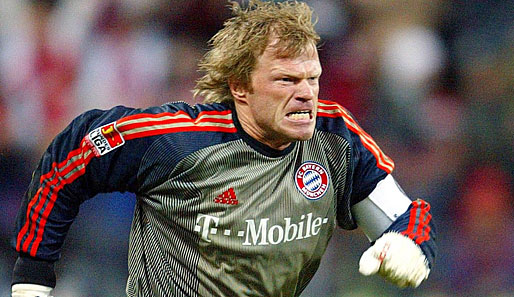
(7) Oliver Kahn [wk]
With his Planet of the Apes chic, and displaying all the restraint under pressure and humility that one expects from German goalkeepers (cf. Lehmann, Jens), Kahn is a natural ‘keeper, an ideal gloveman. Could probably jibber-jabber and schieß-sprache at the batsman all day, too.

(8) Kublai Khan
Gets in on account of (a) funding the ground and pavilion out in Xanadu, and (b) being the grandson of the captain. Bowls decent leggies, too – albeit perhaps not as good as ol’ Gengho reckons.


(9) Shahrukh Khan
Bollywood actor. Owner of Kolkata Knight Riders. From what I can glean, is very, very good at having his picture taken and waving at the camera. Just about manages to suppress the ‘I cannot believe my fucking luck’ smile from his visage, too, so gets in as master of spin: off breaks, to be precise.  


(10) Khan Noonien Singh
Genetically engineered superhuman tyrant familiar to Trekkies the world over. The Christian symbolism of Star Trek is well known (Captain Kirk), so that would make Khan a devil figure, cast out and seeking vengeance – essentially the mentality one is after in a new ball bowler.

(11) James Caan [vc]
Not the supremely capable of plastering a charming smile on his face to hide his moneylust entrepreneur from Dragon’s Den who helps the country of his birth (where he was given a name, Nazim Khan, that he felt was perhaps just a bit too Urdu for business) by offering to buy babies from folk stricken by the floods, but the star of Stephen King adaptation Misery, Rollerball, and The Godfather, where he memorably portrayed the volatile and violent Sonny Corleone. This hot-headedness and familiarity with the psychology of highly dangerous hard-ball games make him primo new conker material. 


And there you have it. Thoughts, etc?


Tuesday, 14 February 2012

NEW BLOG: DOG BEFORE WICKET


This post is to announce an offshoot, a spin-off, a side project to reverse sweeper – namely, a blog devoted to my cricketing reminiscences: Dog Before Wicket (if you haven’t worked it out, my nickname used to be ‘Dog’, as in Scotty Dog.) 

I decided to start the new blog because I had been sitting on two substantial old texts that I’d written in the 1990s, texts that are probably of zero interest to anyone beyond the North Staffordshire and South Cheshire League, texts that I had revisited fairly recently with a view to including them on a Moddershall CC website that was in the pipeline (a pipeline that I was building). At the time of writing, and with circumstances having taken me away from my beloved old club, such a site has not yet emerged. So, Dog Before Wicket will be their first home. Their kennel.

In addition to these, erm, dog-eared old works, there is some new material, stuff that had been swimming about in the back of my mind, occasionally coming up for air – things that I had not so much half-written, as half-thought about writing. Chiefly, this means an account of the 2008 title victory that I’ve given the provisional title Underdogs, Under Dog.

That season contained more than a few memorable moments and matches, recollection of which gave me the idea of compiling a list of all the ‘Champagne Moments’ of my playing days – taking in Moddershall CC, Wollaton CC in the Nottinghamshire Premier League, Nottingham University, the NSSCL Representative XI – and perhaps even some memories from watching cricket on TV and live. I haven’t yet finished this list, let alone started writing about the events and episodes, but suffice to say it is not intended to be a long, self-congratulatory pat on the back for myself so much as the jumping off point for some stories that are perhaps interesting for those involved in them.

Finally, I had other material in hand, memoirs relating to some of the more controversial episodes I have been caught up in. Crikileaks, if you will. I’m sure the Official Secrets Act now permits me to publish these. I had thought about calling these Lowlights, as opposed to the Highlights mentioned above, but it’s not entirely true that I didn’t enjoy them.

So, if any of that is of any interest to you, drop in at Dog Before Wicket from time to time. And bring your friends.


Monday, 6 February 2012

ONCE UPON A TIME IN THE WEST COUNTRY

Double Gloucester: Kim Barnett indicates a fourth successful trip to Lord's

Last Monday, SPIN magazine published a ten-page interview I conducted with two Stoke-on-Trent-born former professional cricketers who, despite an age difference of 13 years, both arrived from different parts of the East Midlands to play for Gloucestershire in 1999, coincidentally the start of an unparalleled run of success for the minnows. Under the innovative and remorseless leadership of Kiwi coach John Bracewell, Kim Barnett and Jeremy Snape helped the county to five trophies in two seasons, turning their Bristol ground into a fortress. All of which contrasts sharply to the recent experiences of neighbours Somerset, five-time limited-overs final losers in the last three seasons, with a last-afternoon County Championship heartache in 2010 thrown in for good measure. 

The piece therefore shares the title of this post, and aims to dissect the secrets of Gloucestershire’s success in such a way that might assist Somerset. Of course, with the magazine on general sale (at WH Smith, priced £3.95), I cannot reproduce the interview here, but below you can read the questions I asked:  


Interview Qs

Given that you each have vast experience skippering county sides and have both been involved on the coaching side of things, I was wondering what words you would offer this group of Somerset players, both as ex-players with many medals and, hypothetically, if you happened to be their coach or captain. 

It seems to me that the Somerset side has many good ingredients for success: plenty of all-rounders, power-hitting, variety in the attack, young and agile bodies in the field… What are they missing? 

So, what do you think are the principal qualities of a successful one-day side? Tactical, technical, psychological elements, maybe…

How much is successful limited-overs cricket about executing a well thought-out game plan (even one that changes from match to match), and how much is adapting quickly to fluctuations in the match situation? 

One of the oft-heard truisms of cricket coaching is the mantra: “know your roles”. Is there a danger that this can be a little rigid? After all, not every game goes according to plan. So, how flexible are these roles? Do the roles have to fit the players’ skills or, conversely, do the players simply have to adapt to a role, or task, dictated by the match situation’s demands?  

Other than Jack Russell and maybe Ian Harvey, who’d end up playing 73 ODIs, there were no real stars in the team. A few of you had picked up a handful of international caps, or would go on to do so, but that team seemed the quintessential case of a whole adding up to more than the sum of its parts (the Man of the Match awards were well shared out). Is that fair enough? And would you say Somerset maybe don’t yet add up to their individual parts?

Around that time both Jeremy and Mark Alleyne were picked for England ODI duties and there were whisperings in the broadsheets that, given Gloucestershire’s domestic dominance, the selectors felt compelled to pick a couple of the team. How much of a factor in your selection, Jeremy, was the team’s success?

Were you ‘ahead of the curve’ as a professional outfit? Were you doing things that other counties weren’t? Or were you maybe just doing the same things, only better? 

Over and above the psychological edge that comes with the accumulation of so many victories, what were the outstanding technical or tactical attributes of that Gloucestershire side? 

I was going to ask whether the fact that you had an experienced team (the XI listed at the end of these Qs had an average age of 30 in 2000, compared to Somerset’s 28) impacted upon the stress on fielding? Evidently not. Was physical fitness a focus for its own sake? 

Talking of belief and confidence, in August 1999 Gloucestershire beat Somerset – who else? – in the final of the NatWest, but that was your second Lord’s final that season, having already annihilated Yorkshire in the B&H by 124 runs earlier that month. Since the pair of you were newcomers at the county, did that Yorkshire performance surprise the pair of you at all? And how important was it in what followed? 

Presumably you started to get a bit of an aura around you?

In the same way that Gloucester banked more and more belief from each win, are Somerset’s current one-day woes a self-reinforcing cycle that might need some radical steps to break it? 

Kim, you’d skippered Derbyshire for 13 seasons before arriving in Bristol. How did you find John Bracewell’s methods and how quickly did you adapt? Was he an ‘acquired taste’ or did the cricketing strategist and theorist in you immediately see the merits in what he was saying? 

Jeremy, leadership is a crucial component of your conception of high-performance training – the need for the leader to challenge, support, inspire. You’ve spoken before about how you found the scientific approach of Bracewell appealing, and quite influential in the path you’ve taken. Did he stand back and allow Alleyne to be the prime mover when it came to tactics (a consultant)? Or was he very much the fountainhead of the ideas (chief executive)? Kim, feel free to answer this one, too. 

What about Somerset’s leadership? I realize it’s impossible to truly know what’s going on within a group from the outside, but sometimes little signs can be detected. Is there anything you’ve noticed from the outside about Trescothick’s leadership, or Hurry’s coaching? It must be difficult to keep sounding convincing to the troops after so many losses… 

A question about the dreaded c-word: choking. I’m not suggesting it’s something Somerset have been guilty of, but would choking, in your view, be a phenomenon that happens primarily to individuals – such that the team gets labelled “chokers” as an aggregate of individual chokes – or is it a trait of the group, an ‘atmosphere’ that infects the team and filters down to the thought-processes of individual players? 

On that note, have you seen signs that Somerset or any of their players lack big-match temperament? 

How about signs they do possess big-match temperament? 

I was wondering whether you think there has been an ‘evolutionary leap’ in limited-overs cricket as a result of T20? Do the new shots, new deliveries, new fielding techniques and the change in perception of what’s an achievable required run-rate all mean that the limited-overs game is fundamentally different to the brand of cricket played by the Gloucester ‘dynasty’? If so, do you think your Gloucestershire would have adapted to these transformations, or were your collective skill-sets more suited to a particular blueprint, which, in turn, was suited to the character of the Bristol track? 

As you say, Bristol became a fortress for you: in 18 competitive 50-over games in your four seasons there, you recorded 16 wins. All four semis in the ‘double double’ were played there. The only teams to leave victorious were Durham in 2001 and Worcestershire in 2002. Did the groundsman look to produce those types of decks to suit the team, or was that the way they inevitably came out?  


Kim, you retired the year before Twenty20 was launched. Do you think you personally would have adapted to it or was your game was better suited to the sort of anchor role you played in 50-over stuff? 

Lastly, Fantasy Cricket time. What would be the outcome if the best XI from your ‘dynasty’ played Somerset? We’ll go with: Barnett, Hancock, Windows, Alleyne, Harvey, Snape, Russell, Averis, Ball, Lewis, Smith. Are you happy with that selection? 

For Somerset, we’ll pick Trescothick, Kieswetter, Trego, Hildreth, Pollard, Buttler, Suppiah, Meschede, Thomas, Kartik, Kirby. Who’d win? Best out of three: one at Bristol, one at Taunton, a decider at Lord’s, if necessary…  

***

If you want their answers, well, you're going to have buy the magazine. Or wait until it's published on the SPIN website, I suppose... 


Friday, 3 February 2012

CRICKET LOOK-A-LIKES #1


OK, it's not big, nor is it clever, but I feel there's a definite need in the cricket world (or The Commonwealth, if you prefer the old nomenclature) to draw attention to certain cricketing look-a-likes, the perhaps non-obvious resemblances that come to me in feverish reveries and through patterns...patterns that emerge from tea-leaves, animal faeces, and the cosmic energy, chi. 

Here's the first, featuring a current Pakistani middle-order tyro and someone destined to play nine T20 Internationals for England in the turbulent aftermath of the Andy Flower regime... 

               
                          Asad Shafiq
Rory Hamilton-Brown

The internet has not been very forthcoming with images. But you can see it, right?